Top 6 At-Home Exosome Serums Compared: Plant vs Stem-Cell Derived (2026)
By Dr. Mei Chen · Cosmetic Dermatologist & Senior Editor, The Exosome Edit
Updated Aug 2026The exosome category exploded in 2024 and 2025. In August 2026 it sits in a strange place.
Quick Answer
- The FDA has approved zero exosome products. None. Topical "exosome" claims are marketing.
- Plant exosomes (rose, Centella) have small case-series evidence. Animal stem-cell exosomes have more.
- Best affordable pick: ExoCoBio ASCE+ (Amazon, $55-$69). Best US clinical pedigree: Plated INTENSE.
- If skeptical: skip exosome serums. Try a propolis + niacinamide serum instead.
Disclosure: this article contains affiliate links — we may earn a commission on qualifying purchases at no extra cost to you.
Last updated: August 2026
Medical Disclaimer: This article is educational, not medical advice. Topical exosome products are sold as a cosmetics in the US — not as drugs. Consult a board-certified dermatologist for personalized recommendations.
Affiliate Disclosure: The Exosome Edit may earn a small commission on products linked at no extra cost to you. Editorial picks are independent.
At a glance: 6 serums ranked
| Rank | Serum | Exosome Source | Price (USD) | Verdict |
|---|---|---|---|---|
| 1 | ExoCoBio ASCE+ Exo Balm SR2 Night Cream | Rose plant stem cell | $55 | Best Amazon-available entry point |
| 2 | Plated INTENSE Serum | Human platelet | $258 | Best US clinical pedigree |
| 3 | Calecim Multi-Action Cream | Red deer umbilical cord | $200 | Best post-procedure cream |
| 4 | ExoCoBio ASCE+ Calming Exosome Ampoule Pro | Rose plant stem cell | $69 | Best high-concentration budget pick |
| 5 | Numbuzin No. 9 NAD+ Lifting | Peptide + NAD+ (no exosome) | $33 | Honest re-label of No. 9 line |
| 6 | Beauty of Joseon Glow Serum | Propolis + niacinamide | $17 | Best honest alternative |
What we looked at
The exosome category exploded in 2024 and 2025. In August 2026 it sits in a strange place.
Real research keeps coming. A 2025 case series of eight patients found rose stem-cell exosomes helped with wound healing, atopic dermatitis, scarring, and post-procedure recovery, though the authors called for randomized trials to confirm it (Journal of Cosmetic Dermatology / PMC, 2025).
But the regulatory floor is also clear. The FDA has approved zero exosome products for any use, a cosmetic or medical, as of August 2026.
Every "exosome serum" you can buy at home is marketed as a cosmetic (FDA Public Safety Notification, 2019). That means no FDA-reviewed efficacy claims, no FDA-reviewed dosing, no FDA-reviewed manufacturing standards.
This list ranks 6 serums commonly marketed as "exosome" or sold next to that category. Two of them don't actually claim exosomes — they're honest contrast picks.
Editorial bias, disclosed up front: we'd rather a reader buy a $17 propolis serum that does something real than a $258 vial of nanovesicles that may or may not penetrate intact stratum corneum.
The FDA has issued multiple warning letters about exosome products marketed with therapeutic claims, most recently against Evolutionary Biologics in December 2024 (FDA Warning Letters, 2024-2025).
1. ExoCoBio ASCE+ Exo Balm SR2 Night Cream — K-Beauty Pioneer's Retail Pick (Verdict: Best Amazon-available entry point)
ExoCoBio sits at the top because it built the category. The Seoul-based biotech holds key patents on rose stem-cell exosome isolation via its ExoSCRT technology (ASCE+, 2026).
The Exo Balm SR2 Night Cream is ExoCoBio's consumer-facing product sold directly on Amazon for about $55 for a 20ml jar. It's built around the brand's "EXO-RSC" rose exosome complex in a freeze-dried capsule format the brand calls EXOCAPSULE technology, positioned as an overnight repair cream rather than a serum (ExoCoBio ASCE+ Exo Balm SR2, Amazon listing, 2026).
ExoCoBio's strongest published evidence is for its in-office SRLV system, used by Korean clinics alongside microneedling — that's a different, clinic-only product from this at-home night cream. There's no published RCT on the retail night cream by itself.
FDA stance: ExoCoBio sells this cream in the US as a cosmetic. Brand HQ: Seoul. Best for: readers who want to try a real, verified rose-exosome product without a $200+ price tag.
The Korean MFDS approval pathway is different from the FDA's. Korean cosmetic regulators allow more functional claims than the US framework. US buyers should treat this as a well-formulated night cream with rose-exosome adjacency, not as a repair drug.
2. Plated Skin Science INTENSE Serum — US Clinical Pedigree (Verdict: Best US-developed pick)
Plated comes out of Mayo Clinic research — developed by Mayo Clinic physician-scientists and backed by more than a decade of in-house clinical study. The INTENSE Serum runs $258 for a 15mL bottle on the brand site. The formula delivers what Plated calls 1+ trillion platelet-derived exosomes per bottle, applied as millions of exosomes per pump (Plated Skin Science, 2026).
It uses human platelet exosomes — not stem cell, not plant. Platelets are easier to source ethically and faster to scale than stem cell tissues.
The brand cites clinical testing showing 2x younger-looking skin, a 26% reduction in the look of fine lines and wrinkles, and 94% of users reporting healthier-looking skin at four weeks. The testing is brand-sponsored, not published in a peer-reviewed derm journal. The serum has won the NewBeauty Award (2024 and 2025) and the 2025 Cosmopolitan Holy Grail Beauty Award (NewBeauty, 2025).
FDA stance: marketed as a cosmetic, not FDA-approved as a drug. Mayo Clinic Store carries it (Mayo Clinic Store, 2026) — that's the closest thing to institutional vetting in this category.
Brand HQ: Rochester, MN. Plated recommends a 6-to-12-week treatment course rather than indefinite use.
That intermittent approach is honest. Most brands push daily-forever positioning that doesn't match the underlying biology. Best for: patients with $258 to spend on a 6-week repair push, ideally stacked with monthly in-office work like microneedling or PRP (platelet-rich plasma).
3. Calecim Multi-Action Cream — Post-Procedure Cream (Verdict: Best for downtime recovery)
Calecim Professional uses cord-lining stem cells from red deer — yes, red deer (Calecim Professional, 2026). Their patented PTT-6 complex contains over 3,000 proteins including growth factors, cytokines, and exosomes.
The Multi-Action Cream runs $200 for a 50g jar direct from Calecim Professional. Cord Lining Conditioned Media is the lead ingredient in the formula, alongside tocopherol, potassium lactate, and fatty acids (Calecim Professional, 2026).
Calecim has been around longer than most. CellResearchCorp, the parent company, holds patents on the cord-lining isolation method in 41 territories worldwide. It's a common post-procedure recommendation among practices that carry the CALECIM Professional line.
FDA stance: sold as a cosmetic. Not FDA-approved for any therapeutic claim. The animal-derived sourcing turns off some patients — others find it less ethically fraught than human umbilical cord products.
Brand HQ: Singapore. Calecim's positioning around post-procedure recovery is the strongest in the category.
Practices that carry CALECIM Professional often include the Multi-Action Cream in aftercare bundles for ablative laser and deep microneedling, given the concentration of Cord Lining Conditioned Media in the formula.
Best for: patients planning RF microneedling, fractional laser, Morpheus8, or moderate chemical peels within the next 30 days. Works well as a bridge between in-office sessions of Sculptra or Hydrafacial.
4. ExoCoBio ASCE+ Calming Exosome Ampoule Pro — High-Concentration Budget Pick (Verdict: Best under $70)
A correction first: an earlier version of this article listed a "Skin1004 Madagascar Centella Exosome" serum in this slot. We could not verify that product exists — Skin1004's real Centella Ampoule line (Centella Ampoule, Centella Teca Ampoule, Probio-Cica Intensive Ampoule, and others) makes no exosome claim at all. We've replaced the entry with a real, verifiable plant-exosome product instead.
ASCE+ Calming Exosome Ampoule Pro is a second, lower-priced product from ExoCoBio — the same company behind pick #1 above, just a different format. It's sold as a 5-week at-home course built around a stated 70,000ppm concentration of Rosa damascena (rose) callus extracellular vesicles (ExoCoBio ASCE+ Calming Exosome Ampoule Pro, Amazon listing, 2026).
Price runs about $69 for the 5-week course on Amazon. The brand markets it as an at-home alternative to in-clinic skin-booster treatments, particularly for post-microneedling or post-laser aftercare — the same positioning ExoCoBio uses for its clinic-only products, just without independent clinical data behind the retail version.
FDA stance: sold as a cosmetic. No specific FDA action against ExoCoBio's US retail listings. Brand HQ: Seoul.
Best for: readers who want a higher rose-exosome concentration than the Night Cream above, in ampoule form, and are comfortable with brand-disclosed (not independently studied) concentration figures.
5. Numbuzin No. 9 NAD+ Lifting Essence — Honest Re-label (Verdict: Skip if you want exosomes specifically)
Including this for honesty. Numbuzin's No. 9 NAD+ BIO Lifting-sil Essence is often shelved next to exosome products but contains no exosome claim (Numbuzin US, 2026).
It runs $33 on the brand US site. The active stack is NAD+ plus 50 peptides — both well-studied for cellular signaling.
NAD+ has stronger published evidence in topical formulas than most plant exosomes. Peptide stacks are mature chemistry. If you're drawn to exosome marketing for the repair angle, a NAD+ + peptide serum gives you real mechanism at one-tenth the price.
FDA stance: sold as a cosmetic. Brand HQ: Seoul. Best for: patients who want repair-leaning skincare without paying exosome prices.
6. Beauty of Joseon Glow Serum — Most Honest Alternative (Verdict: Best value in the category)
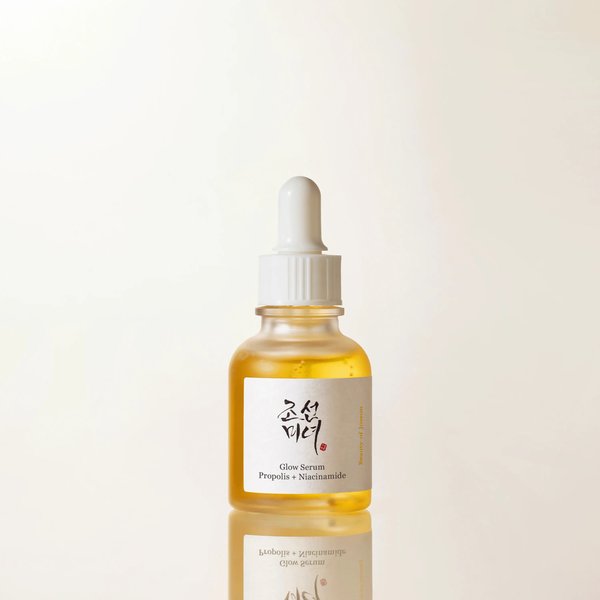
This is the contrast pick. Beauty of Joseon's Glow Serum contains no exosomes. It's 60% propolis extract plus 2% niacinamide and 0.5% BHA — period (Beauty of Joseon, 2026).
Price: $17 for 30ml on iHerb and Amazon. Every active is well-studied.
Niacinamide at 2-5% has decades of RCT data for barrier function, pigmentation, and pore appearance (Incidecoder, 2026). Propolis has antimicrobial and anti-inflammatory evidence. BHA exfoliates measurably.
We include this because the honest comparison matters. A reader with $258 to spend can buy 15 bottles of this and have actives with studied evidence — or one bottle of Plated INTENSE with brand-sponsored data. Both choices are valid.
The math just deserves disclosure. FDA stance: a cosmetic, like everything else here. Best for: patients who want real actives at honest prices.
How we evaluated each label
Most exosome serum labels are not transparent. The category leans on proprietary-complex language that hides exosome counts and source-cell details.
Three things to scan for before paying $100+ for a bottle.
Exosome count or concentration. Legitimate brands disclose something concrete. ExoCoBio's Calming Ampoule Pro publishes a 70,000ppm concentration figure. Plated publishes 1+ trillion platelet-derived exosomes per bottle.
Brands that won't quote a number are usually hiding low levels. Anything labeled "contains exosomes" without quantification is a red flag.
Source cell and tissue origin. Plant stem cell from rose, Centella, or edelweiss. Or human platelet. Or mammalian umbilical cord.
Each has different cargo and different regulatory exposure. If the label says "stem cell exosomes" without specifying species and tissue, the brand is being evasive.
Supporting actives at clinical levels. Niacinamide at 2-5%, peptides at quantified levels, hyaluronic acid molecular weight ranges. These are the ingredients with actual studied topical evidence.
If they're at useful levels, the serum works even if the exosome claim doesn't hold up. This is how SkinMedica built its name — quantified actives, published trials, open INCI lists.
Bottom line: who should skip this category
Honest answer: most patients. The published evidence for at-home topical exosome serums is weak relative to the price tag.
Three groups in particular should redirect their skincare budget.
Patients with active rosacea, perioral dermatitis, or compromised barriers. Many exosome serums stack other actives — peptides, growth factors, antioxidant complexes — that themselves cause irritation. A simple barrier-repair routine with ceramides, panthenol, and centella beats an exosome serum for this group.
Patients on tight skincare budgets. A $17 niacinamide-based serum delivers more real benefit than a $200+ exosome cream for most concerns. The opportunity cost matters.
Spend the $200 on three sessions of in-office treatment instead. Or on a year of well-studied actives like retinoids and vitamin C.
Patients without a repair-skincare baseline. If you're not already using SPF 30+ daily, a topical antioxidant, and either Retin-A (tretinoin), Differin (adapalene), or a peptide serum, an exosome serum is not the gap.
The fundamentals deliver 80% of the benefit at 10% of the cost. Build the SkinMedica baseline first, then layer exosomes as the finishing experiment. BeautyStat Universal C Skin Refiner makes a solid antioxidant base if you're starting from zero. Skinuva Scar offers stronger scar-specific evidence than any topical exosome.
Frequently Asked Questions
What is the FDA stance on exosome serums in 2026?
The FDA has approved zero exosome products for any use, a cosmetic or medical. Topical exosome serums are sold as a cosmetics in the US, meaning brands cannot make therapeutic claims like "treats wrinkles" or "repairerates skin." The agency issued public safety alerts in 2019, 2020, and 2023, and has sent at least six warning letters to companies marketing exosome products with drug claims, most recently in late 2024 and September 2025 (FDA, 2025). Topical a cosmetic products are subject to lower regulatory scrutiny than injectables, but a cosmetic claims still cannot cross into drug territory.
Do topical exosomes actually penetrate intact skin?
Limited evidence. Plant-derived exosomes are small enough to cross biological barriers in lab and clinical case settings (Journal of Cosmetic Dermatology / PMC, 2025). Whether they cross intact human stratum corneum at clinically meaningful levels is unresolved. The strongest topical data comes from microneedling protocols where exosomes are applied to skin with mechanical channels. Topical-only application without microneedling has weaker published evidence. Several derm reviews in 2025 noted that the at-home topical penetration question remains the central open scientific issue in the category.
Plant vs animal exosomes — which is better?
Different tradeoffs. Plant exosomes (rose, Centella, edelweiss) have low immunogenicity and easier sourcing — the published case-series evidence is small but growing, with a 2025 Rosa damascena case series showing benefit across wound healing, atopic dermatitis, and scarring. Animal stem-cell exosomes (umbilical cord, platelet) carry more complex cargo and have more published research overall, but raise sourcing-ethics questions and tighter FDA scrutiny. Neither has a published head-to-head RCT in at-home topical use as of August 2026.
Is the clinical evidence for at-home exosome serums strong?
Mostly weak. Most brand-cited clinical data is in vitro (lab dish) or brand-sponsored. Peer-reviewed RCTs on at-home topical exosome serums are scarce. The strongest derm evidence is for in-office injectable use combined with microneedling, not at-home topical use alone (Salisbury Plastic Surgery, 2025). Patients who want repair skincare with stronger evidence should look at retinoids, peptide serums, and growth-factor serums with studied RCT data going back years.
How do exosome serums compare to growth-factor serums?
Growth-factor serums have a longer track record. SkinMedica TNS Essential Serum, BeautyStat Universal C, ISDIN Isdinceutics, and similar have studied data going back to the 2010s. Exosomes carry growth factors plus signaling RNAs, in theory making them more bioactive than growth factors alone. In practice, the topical penetration question hits both categories. For at-home use with the strongest evidence base, a growth-factor serum from SkinMedica or a retinoid like Retin-A (tretinoin) or Differin (adapalene) remains the conservative pick. Patients drawn to the exosome marketing for the repair angle are often better served by a well-formulated peptide or growth-factor serum at half the price.
Related Reading
- Salmon-DNA vs Stem Cell Exosomes: 2026 Performance Comparison
- Topical vs Injectable Exosomes: 2026 Guide
- Best Regenerative Skincare for Post-Procedure Recovery (2026)
-- The Exosome Edit Team
META_DESCRIPTION: Compared: 6 at-home exosome serums. Exosome source, other actives, price, evidence, FDA stance, and verdict for each.