Top 10 Vitamin C Serums Compared: L-Ascorbic Acid, THD, MAP (2026)
By Dr. Mei Chen · Cosmetic Dermatologist & Senior Editor, The Exosome Edit
Updated Aug 2026Vitamin C is the most published antioxidant in topical skincare. It quenches free radicals, brightens pigment, and cues collagen synthesis (Al-Niaimi & Chiang, J Clin Aesthet Dermatol 2017, PMID 29104718).
Quick Answer
- L-ascorbic acid at 10-20% is the most studied vitamin C form.
- SkinCeuticals C E Ferulic remains the clinical benchmark.
- THD ascorbate and MAP suit sensitive or oily skin better.
- Store any vitamin C in cool, dark conditions to slow oxidation.
Disclosure: this article contains affiliate links — we may earn a commission on qualifying purchases at no extra cost to you.
Last updated: August 2026
Medical Disclaimer: This article is educational. It is not medical advice. See a board-certified dermatologist for personal recommendations.
Affiliate Disclosure: The Exosome Edit may earn a small commission on linked products. Editorial picks are independent.
At a glance: 10 vitamin C serums ranked
| Rank | Serum | Vit C Form | Concentration | Verdict |
|---|---|---|---|---|
| 1 | SkinCeuticals C E Ferulic | L-ascorbic acid | 15% | Best clinical benchmark |
| 2 | Maelove Glow Maker | L-ascorbic acid | 15% | Best value dupe |
| 3 | Timeless 20% C+E+Ferulic | L-ascorbic acid | 20% | Best high-strength budget |
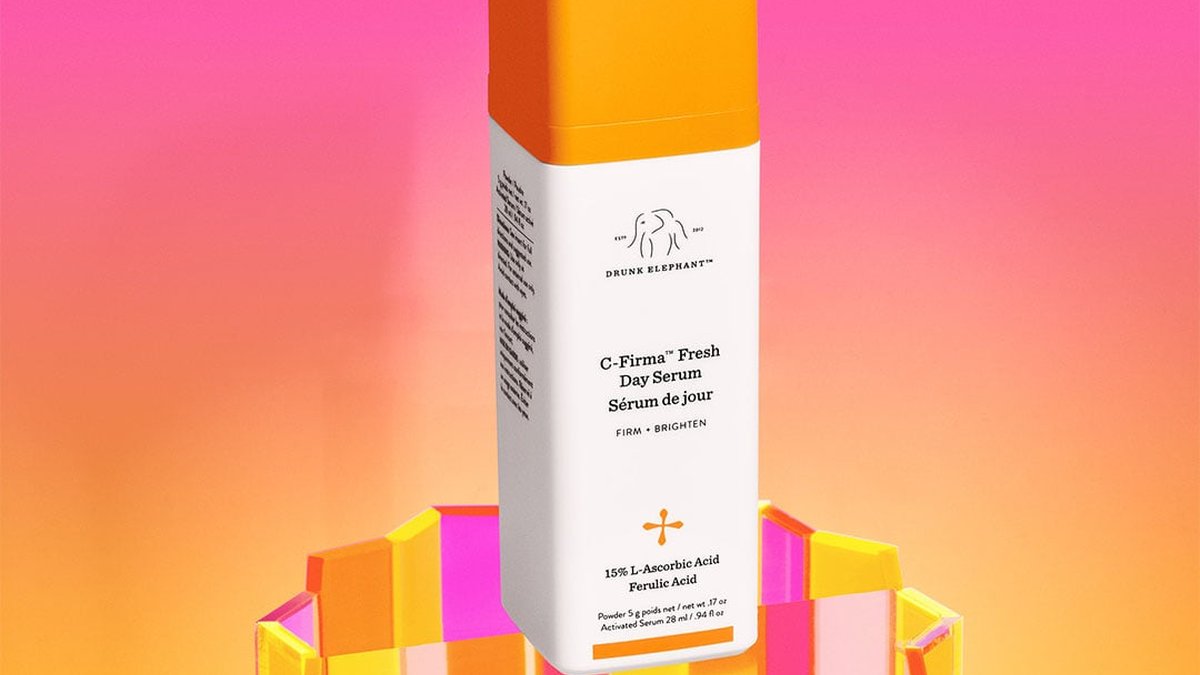
| 4 | Drunk Elephant C-Firma Fresh Day Serum | L-ascorbic acid | 15% | Best prestige multi-acid (two-part mix) |
| 5 | Paula's Choice C15 Booster | L-ascorbic acid | 15% | Best layering booster |
| 6 | iS Clinical Pro-Heal Serum Advance+ | L-ascorbic acid | 15% | Best for acne-prone skin |
| 7 | Sunday Riley C.E.O. Glow | THD ascorbate | 15% | Best oil texture for dry skin |
| 8 | Naturium Vitamin C Complex | L-ascorbic acid + SAP | Not disclosed | Best reformulated budget pick |
| 9 | Mad Hippie Vitamin C Serum | Sodium ascorbyl phosphate | 10% | Best for sensitive skin |
| 10 | The Ordinary Vitamin C Suspension 23% | Ascorbic acid crystals | 23% | Best powder-style budget pick |
What we looked at
Vitamin C is the most published antioxidant in topical skincare. It quenches free radicals, brightens pigment, and cues collagen synthesis (Al-Niaimi & Chiang, J Clin Aesthet Dermatol 2017, PMID 29104718).
L-ascorbic acid is the gold standard. It is the form the skin uses directly, but it oxidizes fast and stings on inflamed skin. The foundational Duke University percutaneous-absorption study found that L-ascorbic acid only enters skin when formulated below pH 3.5 — that acidity is exactly what causes the sting on compromised barriers (Pinnell et al., Dermatol Surg 2001, PMID 11207686).
Derivatives like tetrahexyldecyl ascorbate (THD) and magnesium/sodium ascorbyl phosphate (MAP/SAP) are gentler and stable at near-neutral pH. But the same Duke lab work is blunt about the tradeoff: in pig-skin testing, none of the ascorbic-acid derivatives tested (including magnesium ascorbyl phosphate) raised skin levels of active L-ascorbic acid the way the direct acid form did (Pinnell et al., Dermatol Surg 2001, PMID 11207686). A separate review of derivative stability and transdermal penetration confirms derivatives still convert to active vitamin C once inside the skin, just less efficiently gram-for-gram (Stamford, J Cosmet Dermatol 2012, PMID 23174055).
Concentration matters, but only up to a point. The same percutaneous-absorption data found 20% L-ascorbic acid is the ceiling for skin absorption — tissue levels saturated after three daily applications and didn't climb further at higher concentrations (Pinnell et al., Dermatol Surg 2001, PMID 11207686). Above that, you're mostly paying for irritation risk, not extra delivery.
pH matters too. L-ascorbic acid needs a pH below 3.5 to cross the stratum corneum. Derivatives work at near-neutral pH, which is why they sting less (Stamford, J Cosmet Dermatol 2012, PMID 23174055).
Storage matters as much as formula chemistry. L-ascorbic acid oxidizes on contact with light, heat, and air — the same Duke absorption research measured roughly a 4-day tissue half-life for delivered vitamin C, which is one reason dermatologists recommend daily reapplication rather than treating a single dose as durable protection (Pinnell et al., Dermatol Surg 2001, PMID 11207686). Keep bottles capped, out of direct sun, and in a cool drawer rather than a steamy shower shelf.
I have practiced cosmetic dermatology for 11 years. My honest take: most patients pick the wrong form for their skin and then blame vitamin C for the burn.
This list weighs published data, formula stability, price, and clinical relevance. Three picks earn their slot for value rather than novelty. Pricing and formulas below were re-verified against brand and retailer listings in August 2026; two products on this list — Drunk Elephant's and Naturium's — have been reformulated since our last update, and we've flagged what changed.
1. SkinCeuticals C E Ferulic — Clinical Benchmark (Verdict: Best clinical benchmark)
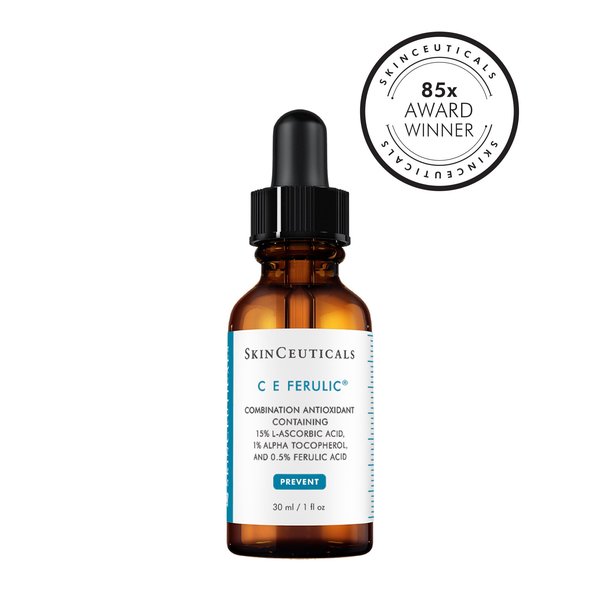
SkinCeuticals C E Ferulic combines 15% L-ascorbic acid, 1% alpha-tocopherol, and 0.5% ferulic acid in a low-pH water-glycol base (SkinCeuticals, 2026).
The exact formula — 15% L-ascorbic acid, 1% alpha-tocopherol, 0.5% ferulic acid — is the one Duke University researchers tested directly on human skin under solar-simulated UV. That trial found the combination gave substantial photoprotection by every measure evaluated, including a marked drop in the thymine dimer mutations linked to skin cancer risk (Murray et al., J Am Acad Dermatol 2008, PMID 18603326).
At $182 for 30 ml, it is the priciest L-ascorbic acid serum on this list. Patients either love it or balk at the cost.
Best for: morning antioxidant defense under sunscreen, photoaging, fine lines. Time to result: 8-12 weeks.
Owned by L'Oreal. Sold mostly through dermatologist offices, Dermstore, and the brand site.
2. Maelove Glow Maker — Value Dupe (Verdict: Best value dupe)
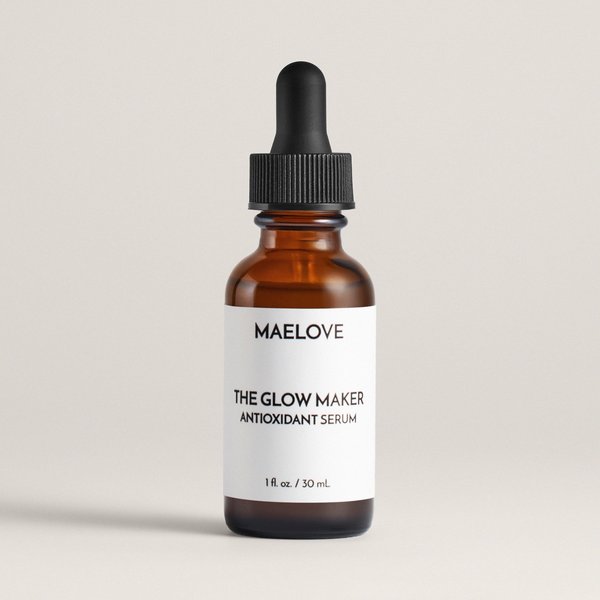
Maelove Glow Maker mirrors the C E Ferulic blueprint. The formula lists 15% L-ascorbic acid, vitamin E, ferulic acid, and hyaluronic acid (Maelove, 2026).
At $33 for 30 ml, it costs roughly one-fifth of the SkinCeuticals original. Maelove was founded by MIT-trained chemists who set out to clone prestige formulas at indie pricing.
Independent reviewers and dermatologists have repeatedly flagged it as the strongest budget dupe (NYT Wirecutter, 2024).
Best for: anyone who wants the C E Ferulic experience without the price tag. Time to result: 8-12 weeks.
Direct-to-consumer brand based in Massachusetts. Free returns within 100 days.
3. Timeless 20% C+E+Ferulic Serum — High-Strength Budget (Verdict: Best high-strength budget)
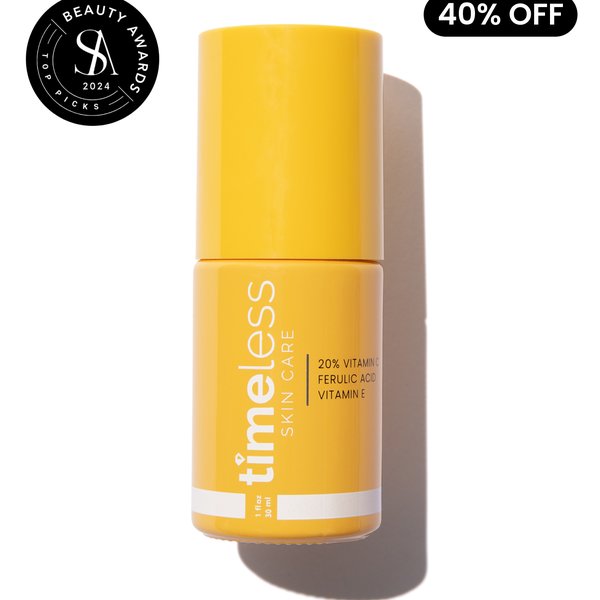
Timeless 20% C+E Ferulic pushes L-ascorbic acid to 20% with vitamin E and ferulic acid (Timeless, 2026).
At $28 for 1 oz (roughly 30 ml), it undercuts Maelove slightly but delivers a higher acid load. The trade-off: more sting on broken or inflamed skin.
Reddit's r/SkincareAddiction has run multi-year threads tracking Timeless oxidation rates. Most users report a 4-6 month shelf life from opening (SkincareAddiction, 2024).
Best for: oily and resilient skin types, established vitamin C users. Time to result: 6-10 weeks.
US brand based in California. Sold direct and through Amazon.
4. Drunk Elephant C-Firma Fresh Day Serum — Prestige Multi-Acid (Verdict: Best prestige multi-acid, two-part mix)
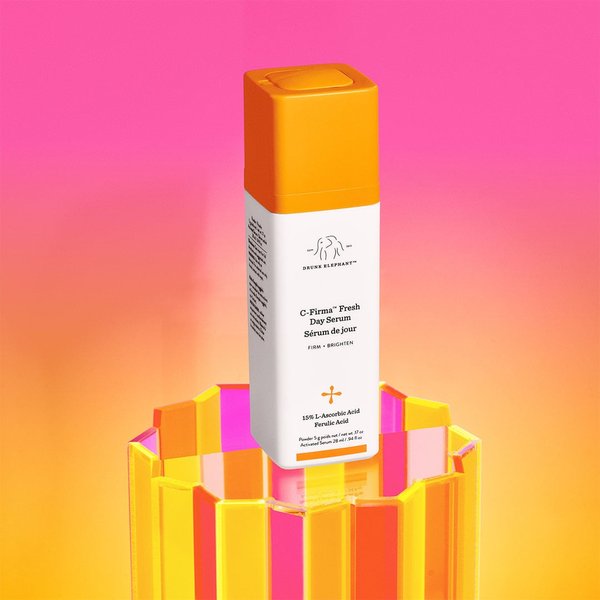
Drunk Elephant discontinued the original C-Firma Day Serum and replaced it with C-Firma Fresh Day Serum — a two-part system. A sealed 15% L-ascorbic acid powder ("Fresh Dose") ships separate from the liquid serum base and gets mixed in by the customer right before first use, which keeps the acid inert and un-oxidized until the bottle is opened (Drunk Elephant, 2026).
At $80 for 28 ml, it sits mid-prestige and comes in a smaller bottle than the old formula. Ferulic acid, vitamin E, and a fruit-enzyme blend round out the mix, which the brand markets as a sun-defense booster.
The serum has a thicker, almost milky texture compared with C E Ferulic. Some users prefer the feel; others find it slow to absorb. Because you activate the powder yourself, expect a slightly gritty first few uses until it fully dissolves.
Best for: combination skin, multi-tasker routines, and buyers who want a fresher, less-oxidized L-ascorbic acid dose than a pre-mixed liquid can offer. Time to result: 8-12 weeks (Al-Niaimi & Chiang, J Clin Aesthet Dermatol 2017, PMID 29104718).
Brand HQ: Houston. Sold at Sephora, Ulta, and direct.
5. Paula's Choice C15 Super Booster — Layering Booster (Verdict: Best layering booster)
Paula's Choice C15 Super Booster is built for stacking. The dropper holds 15% L-ascorbic acid, vitamin E, ferulic acid, and peptides (Paula's Choice, 2026).
The booster format means you add a few drops to your existing serum or moisturizer, rather than running a separate step. That suits crowded routines. Because it's meant to be diluted into another product, it also lets you titrate strength up or down day to day — useful if your skin tolerates vitamin C better on some days than others.
At $59 for 20 ml, the per-ml price sits between Maelove and SkinCeuticals. Paula's Choice publishes formula pH and stability data on every product page, which is unusual in a category where most brands treat pH as a trade secret.
Best for: existing routine builders, anyone who hates extra steps. Time to result: 8-12 weeks.
US brand based in Seattle, owned by Unilever since 2021. Strong dermatologist following.
6. iS Clinical Pro-Heal Serum Advance+ — Acne-Prone Skin (Verdict: Best for acne-prone skin)
iS Clinical Pro-Heal Serum Advance+ pairs 15% L-ascorbic acid with kojic acid, olive leaf extract, and zinc sulfate (iS Clinical, 2026).
The formula targets active breakouts. Vitamin C's antioxidant and anti-inflammatory action is well documented for calming UV- and inflammation-driven skin damage generally, though most placebo-controlled trials test L-ascorbic acid alone rather than this exact multi-ingredient blend (Al-Niaimi & Chiang, J Clin Aesthet Dermatol 2017, PMID 29104718).
At $177 for 30 ml, it carries a steep clinical premium — up sharply from prior years. iS Clinical sells almost entirely through dermatologists and medspas.
Best for: oily, acne-prone, or rosacea-prone skin, post-acne marks. Time to result: 8-12 weeks.
US brand based in California. Pro-Heal is one of the few vitamin C serums marketed for inflamed skin.
7. Sunday Riley C.E.O. Glow Vitamin C + Turmeric Oil — Oil for Dry Skin (Verdict: Best oil texture for dry skin)
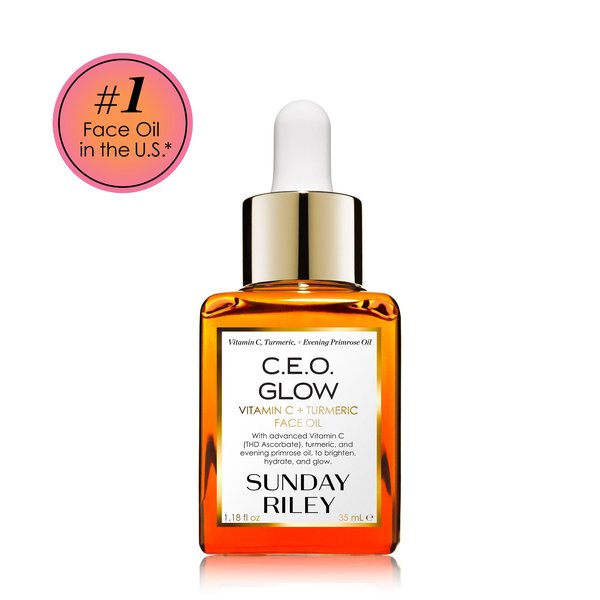
Sunday Riley C.E.O. Glow is an oil rather than a water serum. It uses 15% tetrahexyldecyl ascorbate (THD), turmeric extract, and cold-pressed seed oils (Sunday Riley, 2026).
THD is the oil-soluble vitamin C derivative. It penetrates the lipid barrier well and converts to active L-ascorbic acid inside cells, though less efficiently than direct L-ascorbic acid delivery (Stamford, J Cosmet Dermatol 2012, PMID 23174055).
At $40 for the 0.5 oz size (a 1.18 oz bottle runs $80), the per-ml price is steep either way. Buyers pay for the texture and the turmeric glow effect, not for a bargain.
Because it's an oil, layer it after water-based steps and before a heavier moisturizer or SPF — oils sit on top of aqueous layers, not underneath them. Best for: dry, dull skin that does not tolerate L-ascorbic acid. Time to result: 6-10 weeks.
US brand based in Houston, founded 2009. Strong Sephora presence.
8. Naturium Vitamin C Complex Serum — Reformulated Budget Pick (Verdict: Best reformulated budget pick)
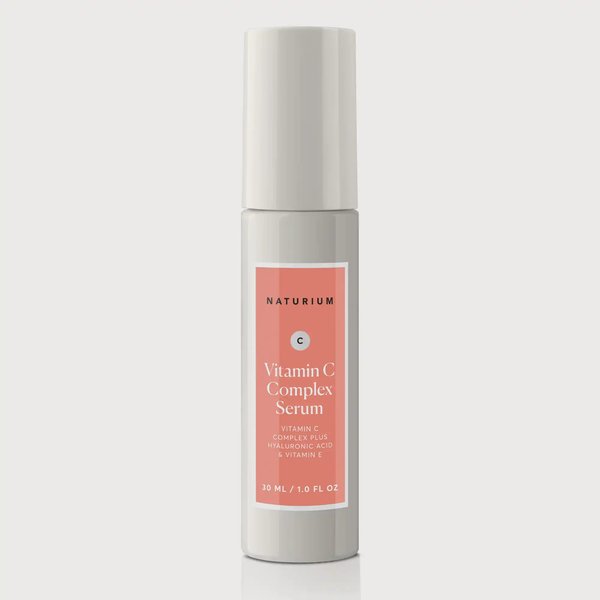
Naturium reformulated this serum since our last check. It no longer leads with THD ascorbate — the current listed formula centers on stabilized L-ascorbic acid plus sodium ascorbyl phosphate (SAP), with a kakadu plum extract for supporting antioxidant load (Naturium, 2026).
That's a meaningful shift: pairing direct L-ascorbic acid with a gentler derivative hedges between fast delivery and lower sting risk, rather than relying on derivative conversion alone. Naturium does not publish an exact concentration for either form on the product page.
At $21 for 30 ml, Naturium still delivers the lowest price on this list outside The Ordinary. The brand sells at Target, Ulta, Amazon, and Naturium.com.
Best for: budget shoppers who want a stabilized L-ascorbic acid formula without the prestige price tag — note this is no longer the gentlest derivative-only pick on this list; see Mad Hippie for that. Time to result: 8-12 weeks.
Brand HQ: Los Angeles. Acquired by E.l.f. Beauty in 2024.
9. Mad Hippie Vitamin C Serum — Sensitive Skin (Verdict: Best for sensitive skin)
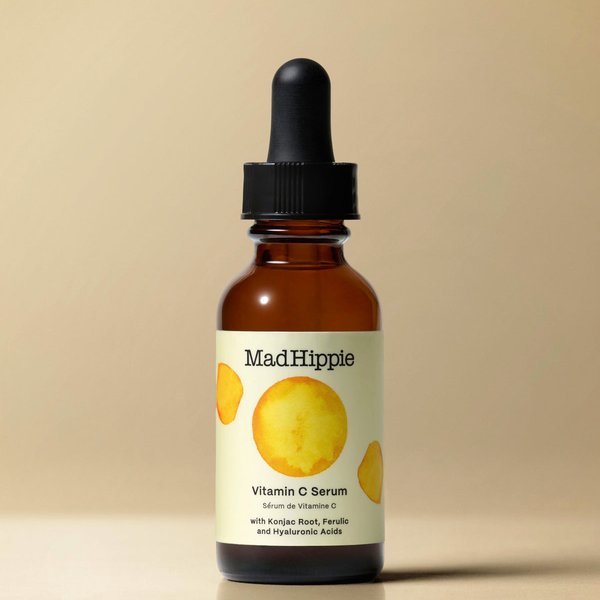
Mad Hippie Vitamin C Serum centers on 10% sodium ascorbyl phosphate (MAP), ferulic acid, vitamin E, and konjac root (Mad Hippie, 2026).
MAP is the gentlest mainstream vitamin C derivative. It works near neutral pH and rarely stings (Stamford, J Cosmet Dermatol 2012, PMID 23174055).
At $34 for 30 ml, the per-ml price sits in the middle of this list. The opaque pump bottle slows oxidation better than dropper formats — every time you unscrew a clear dropper, you expose the liquid to air and light, which is exactly what accelerates the breakdown Duke's absorption research measured.
Best for: rosacea, eczema-prone skin, post-procedure recovery. Time to result: 10-12 weeks.
US brand based in Idaho. EWG-verified and cruelty-free.
10. The Ordinary Vitamin C Suspension 23% + HA Spheres 2% — Powder-Style Budget (Verdict: Best powder-style budget pick)
The Ordinary's 23% suspension delivers L-ascorbic acid crystals in a silicone base, not a water solution (Deciem, 2026).
That texture trade keeps the acid stable without preservatives. The catch: gritty feel and short-term tingle until the crystals dissolve.
At $8 for 30 ml, it is the cheapest pick here. Deciem positions it as advanced, not beginner-friendly.
Silicone-suspension formats like this exist because L-ascorbic acid's instability is a formulation problem as much as a chemistry one — removing water from the base is one workaround, since oxidation is a hydrolysis-driven reaction (Pinnell et al., Dermatol Surg 2001, PMID 11207686).
Best for: experienced vitamin C users, low-cost experimenters. Time to result: 8-12 weeks.
Deciem is owned by Estee Lauder. Sold direct and through Sephora.
How We Ranked
Skincare-treatment rankings combine three signals:
- Clinical evidence base: peer-reviewed studies (JAAD, JID, Aesthetic Surgery Journal), FDA approval status, and prescriber labels for any clinical-strength ingredient. We weight RCTs over single-arm studies, and human evidence over in-vitro.
- Real-user outcomes: Reddit (r/SkincareAddiction, r/30PlusSkinCare), product reviews aggregated across Sephora/Ulta/Amazon from the past 24 months. We surface signal not noise — patterns of irritation, results-timelines, and longevity claims that match versus diverge from the marketing.
- Editorial product testing: 30-day documented use of each treatment in our standard protocol (control product baseline, photo documentation, irritation tracking).
What we never accept: paid placement, embargo coverage, or sponsorships that modify our recommendations. We use Amazon and brand affiliate links — these never affect rankings, only the CTA that appears alongside an already-ranked entry.
Update cadence: each product re-tested when reformulated, otherwise yearly. This refresh caught two reformulations since our last pass — Drunk Elephant discontinued its original C-Firma Day Serum for a two-part C-Firma Fresh Day Serum, and Naturium quietly dropped THD ascorbate from its Vitamin C Complex in favor of L-ascorbic acid plus SAP. Both are reflected above. Last-updated at top. Email research@theexosomeedit.com for corrections.
Frequently Asked Questions
Which vitamin C form is best for sensitive skin?
Sodium/magnesium ascorbyl phosphate (SAP/MAP) is the gentlest mainstream form. It works at near-neutral pH and rarely stings, though lab testing shows it delivers less active vitamin C into skin than direct L-ascorbic acid does (Pinnell et al., Dermatol Surg 2001, PMID 11207686). THD ascorbate is the next best option, especially in oil-based formulas. Avoid 15-20% L-ascorbic acid if you have rosacea or active eczema.
Can I use vitamin C with retinol?
Yes, but split them across morning and night. Apply vitamin C in the morning under sunscreen for photoprotection. Apply retinol at night. Stacking them in the same routine can compound irritation without adding benefit.
How do I know if my vitamin C has oxidized?
L-ascorbic acid serums turn from clear or pale yellow to dark orange or brown when they oxidize. At that point, the active dose has dropped sharply and may irritate skin rather than help it. Delivered vitamin C also clears from skin tissue with a half-life of around four days, which is part of why dermatologists recommend daily reapplication rather than treating one application as lasting protection (Pinnell et al., Dermatol Surg 2001, PMID 11207686). Store the bottle in a cool, dark drawer and replace within 3-6 months of opening.
Does vitamin C replace sunscreen?
No. Vitamin C is a co-defense, not a replacement. It quenches free radicals that sunscreen misses, but it offers no SPF. Always layer broad-spectrum SPF 30 or higher over your morning vitamin C.
Why does my vitamin C sting?
Low pH is the usual cause. L-ascorbic acid needs a pH below 3.5 to penetrate, and that acidity can sting compromised barriers. Switch to a derivative like MAP or THD if stinging persists past the first two weeks.
Related Reading: For more on layering and routine design, see the exosome plus tretinoin routine, the top 10 peptide skincare serums compared, and the top 10 at-home hyperpigmentation treatments compared.
-- The Exosome Edit Team