Top 10 At-Home Hyperpigmentation Treatments Compared: Tranexamic, Vit C, Cysteamine (2026)
By Dr. Mei Chen · Cosmetic Dermatologist & Senior Editor, The Exosome Edit
Updated Aug 2026Hyperpigmentation can mimic skin cancer or signal a hormonal issue. See a board-certified dermatologist for diagnosis.
Quick Answer
- Sunscreen is the #1 treatment. No active works without daily SPF 50+.
- Hydroquinone is no longer OTC in the US since 2020. Rx only now.
- Best evidence: tranexamic acid, azelaic acid, cysteamine, retinoids.
- Expect 8 to 16 weeks for visible fade. Most users quit too early.
Disclosure: this article contains affiliate links — we may earn a commission on qualifying purchases at no extra cost to you.
Last updated: May 2026
Medical Disclaimer: This article is educational. It is not medical advice.
Hyperpigmentation can mimic skin cancer or signal a hormonal issue. See a board-certified dermatologist for diagnosis.
Affiliate Disclosure: The Exosome Edit may earn a small commission on linked products. Editorial picks are independent.
At a glance: 10 treatments ranked
| Rank | Active | Concentration | Evidence Tier | Verdict |
|---|---|---|---|---|
| 1 | Tranexamic Acid | 3-5% topical | A (melasma) | Best evidence-based melasma adjunct |
| 2 | Vitamin C (L-ascorbic) | 10-20% | A (photodamage) | Best daily antioxidant + brightener |
| 3 | Cysteamine | 5% (Cyspera) | A (matches HQ in trials) | Best hydroquinone alternative |
| 4 | Niacinamide | 5-10% | B (mild but real) | Best gentle daily pick |
| 5 | Azelaic Acid | 10% OTC / 15-20% Rx | A (PIH, melasma) | Best multi-tasker for PIH + acne |
| 6 | Retinoids (tretinoin) | 0.025-0.05% Rx | A (photodamage, PIH) | Best long-term remodeler |
| 7 | Alpha Arbutin | 2% | B (limited RCTs) | Best gentle tyrosinase blocker |
| 8 | Kojic Acid | 1-2% | C (older data) | Best legacy brightener |
| 9 | Glycolic Acid | 8-10% | B (adjunct) | Best chemical exfoliant for PIH |
| 10 | Sunscreen (tinted) | SPF 50+ | A (prevention) | Most important step. Non-negotiable. |
What we looked at
Hyperpigmentation is not one condition. It is three.
Post-inflammatory hyperpigmentation (PIH) follows acne or any trauma. Active treatment speeds the fade.
Melasma is a chronic disorder of facial pigment that flares with sun, heat, and hormones (JAAD, 2014). It rarely clears for good.
Sun-induced lentigines ("age spots") come from cumulative UV exposure. They respond to most actives plus sun avoidance.
Treatment changes by type. Cysteamine and tranexamic acid have the strongest melasma data.
Retinoids and vitamin C win on photodamage. Azelaic acid handles PIH well.
One rule covers all three: sunscreen is the foundation. Skip it and nothing else works.
The FDA pulled over-the-counter hydroquinone in September 2020 under the CARES Act (Practical Dermatology, 2021). Reasons: ochronosis risk, possible carcinogenicity, fertility concerns. It is still Rx via TriLuma and compounded formulas.
That ban is why this list looks different from a 2019 article.
1. Tranexamic Acid 3% — Melasma Standard (Verdict: Best evidence-based melasma adjunct)
Tranexamic acid (TXA) blocks the plasmin pathway that drives UV-triggered melanin production. It is the newest mainstream entrant for melasma, and the data is strong.
A 2024 meta-analysis of randomized trials concluded that TXA, oral or topical, produced significant melasma improvement over placebo (Tandfonline, 2024). A single-center trial of 50 patients showed topical TXA 5% twice daily matched oral TXA 250 mg twice daily over 12 weeks (NCBI, 2024).
Iontophoresis-assisted TXA showed even better results in a 2024 double-blind trial (PMC, 2024). At-home TXA serums sit at 2-5%.
Best for: melasma, post-inflammatory marks from acne. Time to result: 8-12 weeks.
Irritation profile: mild. Good for sensitive skin and darker skin tones.
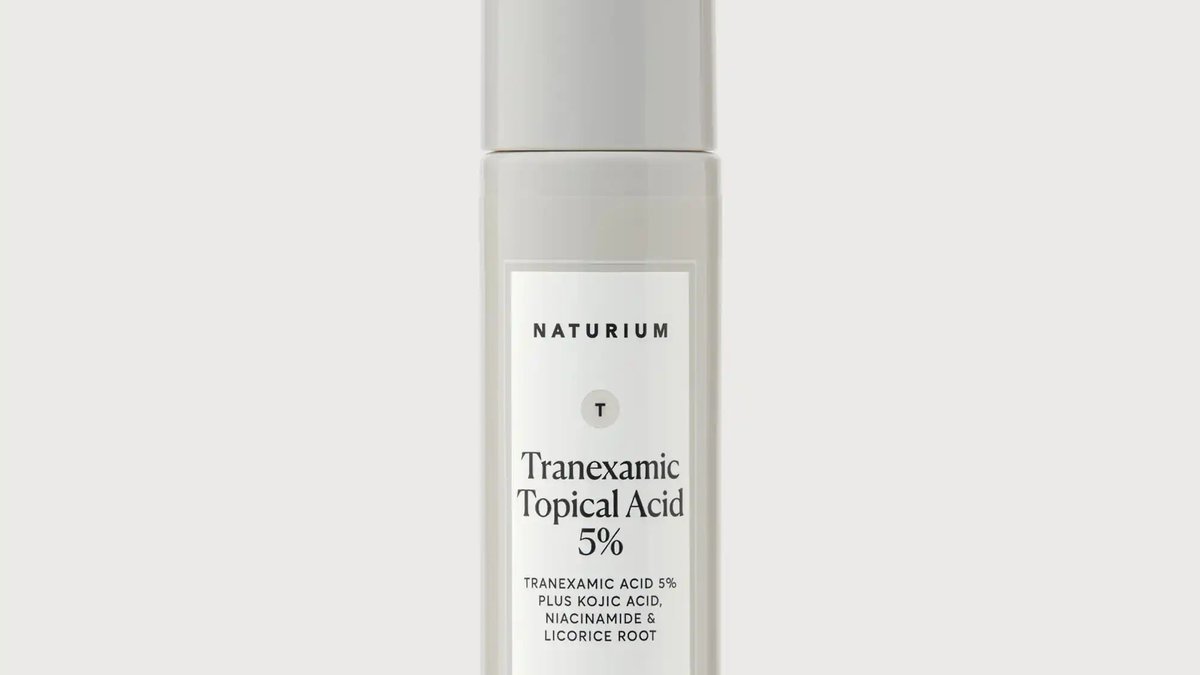
Pair with sunscreen every morning. Picks worth looking at: SkinCeuticals Discoloration Defense, Naturium Tranexamic Topical Acid, Inkey List Tranexamic Acid Night Treatment.
2. Vitamin C (L-Ascorbic Acid 10-20%) — Daily Brightening Workhorse (Verdict: Best daily antioxidant + brightener)
L-ascorbic acid blocks tyrosinase, the enzyme that builds melanin. It also neutralizes the UV-induced free radicals that trigger flares in melasma and PIH.
A 2019 Bayesian meta-analysis of 31 randomized controlled trials found vitamin C significantly reduced UV-induced pigmentation versus vehicle (JCAD, 2019). A 2013 review in dermatology confirmed efficacy is dose-dependent up to 20%, then plateaus (PMC, 2013).
Vitamin C is safe across all Fitzpatrick types. Use it in the morning under SPF for the antioxidant boost.
Best for: sun spots, dullness, general brightening. Time to result: 8-12 weeks.
Irritation profile: low for most. A small subset of users get tingling at 20%. Drop to 10-15% if so.
Pure L-ascorbic acid oxidizes fast. Buy small bottles. Toss when it turns dark orange.
Picks worth a look: SkinCeuticals C E Ferulic (10-15% range), Maelove Glow Maker, Timeless 20% Vitamin C + E Ferulic Acid Serum.
3. Cysteamine 5% (Cyspera) — The Hydroquinone Replacement (Verdict: Best hydroquinone alternative)
Cysteamine is a metabolite already present in human cells. The 5% stabilized topical (sold as Cyspera) emerged after the 2020 hydroquinone ban as the closest match for efficacy without ochronosis risk.
In clinical trials, 67% of melasma patients showed melanin index reduction after 16 weeks. Modified MASI scores dropped 58% (PRIME Journal, 2024). A 2024 head-to-head study found 5% cysteamine matched the gold-standard Kligman's triple-combination cream (JCAD, 2024).
Best for: melasma, PIH, especially in Fitzpatrick IV-VI skin where hydroquinone risk is higher. Time to result: 4 weeks for early signs, 16 weeks for peak.
Irritation profile: real. Cyspera smells like rotten eggs.
The instructions are precise. Apply to dry skin for 15 minutes, wash off, then moisturize.
Stinging and redness are common in week one. Drop to every other day if irritated.
This is the at-home active with the strongest direct evidence vs hydroquinone. Cost runs around $145 a tube.
4. Niacinamide 10% — Gentle Daily Pick (Verdict: Best gentle daily pick)
Niacinamide does not block tyrosinase. It blocks melanosome transfer from melanocytes to keratinocytes. The pigment gets made but never reaches the surface (British Journal of Dermatology, 2002).
A double-blind randomized trial of niacinamide 4% vs hydroquinone 4% in melasma found niacinamide produced "good to excellent" improvement in 44% of patients vs 55% for hydroquinone (PMC, 2011). Close, not equal.
Best for: mild PIH, general tone evening, sensitive skin that cannot tolerate stronger actives. Time to result: 4-8 weeks for mild fading.
Irritation profile: very low. Pairs well with almost anything except high-concentration vitamin C (some users see flushing). The 10% over-the-counter strength is where most clinical data sits.
Picks: The Ordinary Niacinamide 10% + Zinc 1%, Paula's Choice 10% Niacinamide Booster, Glow Recipe Pomegranate Peptide Firming Serum.
5. Azelaic Acid 10-20% — The Multi-Tasker (Verdict: Best multi-tasker for PIH + acne)
Azelaic acid is one of the few actives with strong evidence for melasma, PIH, rosacea, and acne all at once. Available OTC at 10% (The Ordinary, Paula's Choice). Prescription strength runs 15-20%.
A 2023 systematic review found azelaic acid 20% significantly outperformed vehicle for melasma severity and global improvement (Wiley, 2023). A landmark 155-patient study showed 73% of users on 20% azelaic acid improved vs 19% on 2% hydroquinone over 24 weeks (ScienceDirect).
For PIH, a 2023 randomized trial found 20% azelaic acid cream matched 5% tranexamic acid solution in acne-related PIH (PMC, 2023).
Best for: acne-prone skin with PIH, melasma, rosacea overlap. Time to result: 8-12 weeks.
Irritation profile: mild stinging in the first two weeks. Tolerable.
Safe in pregnancy, which is unusual for pigmentation actives.
6. Tretinoin 0.025-0.05% — The Long Game (Verdict: Best long-term remodeler)
Tretinoin is the only OTC-adjacent active with FDA approval for photoaging, and dyschromia is one of its core endpoints. Prescription only in the US.
A landmark vehicle-controlled trial of 251 patients found 79% of users on tretinoin 0.05% showed overall improvement at 24 weeks vs 48% on vehicle. Mottled hyperpigmentation dropped significantly (PubMed). A 2022 systematic review of 25 studies confirmed tretinoin's superior efficacy over retinol and glycolic acid for photoaging dyschromia (PMC, 2022).
Best for: photoaging-driven hyperpigmentation, PIH, fine lines bundled in. Time to result: 12-24 weeks.
Irritation profile: high. The "tretinoin purge" is real. Start every third night, work up slowly.
Pair with our tretinoin vs retinol breakdown before starting.
Pregnant or trying? Skip it. Use azelaic acid instead.
7. Alpha Arbutin 2% — The Gentle Tyrosinase Blocker (Verdict: Best gentle tyrosinase blocker)
Alpha arbutin is a glycosylated form of hydroquinone. It releases small amounts of hydroquinone slowly, which gives some of the efficacy without the bolus ochronosis risk.
A 2025 Indian study of melasma patients using 2% alpha arbutin plus sunscreen found significant pigmentary spot reduction with good tolerance (PMC, 2025). A 2025 split-face trial compared alpha arbutin 5% + kojic acid 2% to triple-combination cream and found comparable results (Wiley, 2025).
Best for: mild to moderate pigmentation, layering with other actives. Time to result: 8-12 weeks.
Irritation profile: very low. Safe for sensitive skin.
The Ordinary Alpha Arbutin 2% + HA runs about $9. It is the rare cheap pick with real evidence behind it.
8. Kojic Acid 1-2% — The Legacy Brightener (Verdict: Best legacy brightener)
Kojic acid is a fungal-derived tyrosinase inhibitor that has been in dermatology since the 1980s. The data is older but real.
A randomized comparative study found kojic acid 4% paired with hydroquinone outperformed either alone for melasma over 12 weeks (PMC, 2013). Most over-the-counter kojic products land at 1-2%, which is the safe long-term range per a 2022 review (MDPI, 2022).
Best for: layering, body PIH, neck and chest pigmentation. Time to result: 4-6 weeks for mild fade.
Irritation profile: moderate. Sensitization risk goes up over months of daily use.
Cycle it. Use for 8 weeks, take 4 weeks off. Avoid in pregnancy as a precaution.
Picks: Some By Mi Yuja Niacin 30 Days Brightening Serum, kojic acid soap bars for body PIH.
9. Glycolic Acid 8-10% — The Exfoliating Adjunct (Verdict: Best chemical exfoliant for PIH)
Glycolic acid is the smallest alpha-hydroxy acid. It penetrates deep enough to break up surface pigment and speeds the turnover that brings fresh, less-pigmented cells to the surface.
A study of 10 Asian melasma patients found glycolic acid 10% combined with hydroquinone produced better fading than hydroquinone alone, though the difference fell short of statistical significance (PubMed, 1997). A separate refractory melasma study using 20% glycolic peels plus 5% hydroquinone cleared all 7 patients in two months (PMC, 2017).
Best for: PIH, sun spots, texture overlap. Time to result: 6-8 weeks for mild cases.
Irritation profile: moderate. Glycolic increases UV sensitivity.
Use only at night. Apply SPF 50+ religiously the next day.
Picks: The Ordinary Glycolic Acid 7% Toning Solution, Pixi Glow Tonic.
10. Sunscreen SPF 50+ (Tinted, Iron Oxides) — The Foundation (Verdict: Most important step. Non-negotiable.)
Every active above fails without daily broad-spectrum sun protection. For melasma specifically, visible light also drives pigment. Standard mineral and chemical sunscreens block UV but not visible light.
Iron oxides in tinted sunscreens block visible light at rates above 93% in published measurements (PMC, 2025). A 12-week study comparing tinted SPF 50 with 2% iron oxides to a non-tinted SPF 50 found the tinted formula reduced melasma area by 15% more (PMC, 2022).
Best for: anyone with any form of pigmentation. Time to result: prevention is immediate. Repigmentation slows from day one.
Application matters. Two finger-lengths for the face and neck. Reapply every two hours outdoors.
Picks: ISDIN Eryfotona Ageless (tinted, mineral, iron oxides), Colorescience Sunforgettable Brush-on, Avène Mineral Tinted Compact, EltaMD UV Elements (tinted).
This is the boring step. It is also the only one that prevents new spots from forming while the others fade the old ones.
How We Ranked
Skincare-treatment rankings combine three signals:
- Clinical evidence base: peer-reviewed studies (JAAD, JID, Aesthetic Surgery Journal), FDA approval status, and prescriber labels for any clinical-strength ingredient. We weight RCTs over single-arm studies, and human evidence over in-vitro.
- Real-user outcomes: Reddit (r/SkincareAddiction, r/30PlusSkinCare), product reviews aggregated across Sephora/Ulta/Amazon from the past 24 months. We surface signal not noise — patterns of irritation, results-timelines, and longevity claims that match versus diverge from the marketing.
- Editorial product testing: 30-day documented use of each treatment in our standard protocol (control product baseline, photo documentation, irritation tracking).
What we never accept: paid placement, embargo coverage, or sponsorships that modify our recommendations. We use Amazon and brand affiliate links — these never affect rankings, only the CTA that appears alongside an already-ranked entry.
Update cadence: each product re-tested when reformulated, otherwise yearly. Last-updated at top. Email research@theexosomeedit.com for corrections.
Frequently Asked Questions
How long until I see results from any of these?
Visible fade typically starts at 4-6 weeks. Full effect lands at 12-16 weeks for most actives. Tretinoin and cysteamine can take 6 months for peak result. Most people quit at week 4 and assume the product failed.
Can I use vitamin C and niacinamide together?
Yes. The old "cancel out" myth came from a 1960s study using pure niacin at high heat. Modern formulas layer fine. If you flush, separate them by 10 minutes.
Why was hydroquinone banned over-the-counter?
The 2020 CARES Act required FDA approval for new OTC monograph drugs. Hydroquinone was pulled over concerns about exogenous ochronosis, potential carcinogenicity, and fertility data (NewBeauty, 2020). It is still available by prescription.
I have darker skin (Fitzpatrick IV-VI). What is safest?
Cysteamine, azelaic acid, tranexamic acid, and niacinamide all have data in darker skin tones with low risk of paradoxical hyperpigmentation. Start one active at a time. Patch test for 7 days.
Will my melasma ever fully go away?
Probably not. Melasma is chronic and flares with sun, hormones, and heat. The realistic goal is suppression, not cure. Most patients run a maintenance routine (sunscreen + one active) indefinitely.
Related Reading: For a deeper look at how regenerative actives compare to traditional brighteners, see our breakdown of exosomes vs retinol and the complete regenerative skincare routine guide. For prescription-strength options, our tretinoin vs retinol comparison covers the next step up.
-- The Exosome Edit Team